Best Electric Cars

Tesla Model 3
- Starting Price $54,900 to $80,900
- TransmissionAutomatic
- Drive TypeRear Wheel Drive (RWD) and All Wheel Drive (AWD)
- Fuel Type Electric (BEV)
- See all


A great car amongst best I’ve ever owned but spoiled a bit by intrusive alarms and occasional heavy braking for no reason. The car’s so called… Read more
“intelligence” would rather I drive into large potholes and blow a tyre, than put a wheel on the white line! It is like it is being controlled by a panic stricken old person and the alarm is loud and distracting

Tesla Model Y
- Starting Price $55,900 to $82,900
- TransmissionAutomatic
- Drive TypeRear Wheel Drive (RWD) and All Wheel Drive (AWD)
- Fuel Type Electric (BEV)
- See all


Cost nothing to run, stunning to look at, drive like a dream. Top service team in Paramatta Show details

Kia EV6 (2022-2026)
- Starting Price $72,660 to $99,660
- TransmissionAutomatic
- Drive TypeRear Wheel Drive (RWD) and All Wheel Drive (AWD)
- Fuel Type Electric (BEV)
- See all


Overall, I enjoyed the acceleration, drive. It has excellent suspension. The visibility from inside at times is limited. I found the following points… Read more
anoying with this car:
1. Interior Console Glare The surface around the gear selector is highly reflective and produces significant glare in bright sunlight.
2. Electrical Lockout Issue The vehicle’s electrical system sporadically locks the ignition, preventing startup. Screenshots of the dashboard notification are available upon request.
3. Tight-Space Maneuverability The turning circle is too wide, making it difficult to steer in confined parking areas. I’m happy to provide additional details if needed.
4. Audio System Quality The sound system lacks clarity and definition, likely due to the use of lower-grade speakers

BYD Sealion 6 (2024-2026)
- TransmissionAutomatic
- Fuel Type Plugin Hybrid (PHEV)

- See all


BYD Sealion 6 warranty denied on factory clip defect without evidence

Hyundai IONIQ 5 (2021-2026)
- Starting Price $69,800 to $110,383
- TransmissionAutomatic
- Drive TypeRear Wheel Drive (RWD) and All Wheel Drive (AWD)
- Fuel Type Electric (BEV)
- See all


There's a reason this car won world car of the year 2022 - it is very good. Show details

Tesla Model S (2013-2026)
- Starting Price $123,500 to $142,300
- TransmissionAutomatic
- Drive TypeAll Wheel Drive (AWD)
- Fuel Type Electric (BEV)
Make America Great Again More like make Tesla Great Again Nothing but issues sold within 3 months at 28 thousand loss bad cars should have bought BYD much better Show details

MG MG4 (2023-2026)
- Starting Price $37,990 to $59,793
- TransmissionAutomatic
- Drive TypeRear Wheel Drive (RWD) and All Wheel Drive (AWD)
- Fuel Type Electric (BEV)
- See all


Our MG4 Excite 51 EV has been excellent, sharp pricing (ours is on a novated lease), a fantastic drive, charging and range all as advertised, with… Read more
economical driving we are getting just under 400 km range from the 51 kWh batt; above the spec. Comfortable seats, ideal for city living, easy to park, software is good but has a few quirks (see reviews), has all the features we need. Now over 2 years old, took it for its first service ($240), no faults to report hasn’t missed a beat. No evidence of batt decline, and we live in high temp Darwin.

BYD Atto 3 (2022-2026)
- Starting Price $39,990 to $51,011
- TransmissionAutomatic
- Drive TypeFront Wheel Drive (FWD)
- Fuel Type Electric (BEV)
- See all


So have owned this car for 2+ years, it goes ok, and was thinking about replacing with the same. BYD have just pushed through an update which has… Read more
made the driving experience terrible. Big screen no functionality at all which is a shame as the previous version was good, not great but good. Now it is shocking, can't understand why you would want little icons on a big screen in a car, no way to customize the screen apart from background pictures, understandable considering that's all it does now I suppose. Very disappointing, but will be able to review new electric car as can't live with st^pid updates.

BYD Seal (2023-2026)
- Starting Price $49,888 to $68,748
- TransmissionAutomatic
- Drive TypeRear Wheel Drive (RWD) and All Wheel Drive (AWD)
- Fuel Type Electric (BEV)
I’ve owned my BYD Seal Performance for almost 18 months, and overall don’t regret buying it. It looks good, is moderately comfortable, drives… Read more
beautifully, accelerates like a bat out of hell, handles and brakes well, and has a reasonable battery range of ~ 560km. So why only three stars?
Because the electronics were clearly designed by unbelievable geeks who don’t give a toss about the people who have to use their product; the scheduled service software updates or the rare Over The Air updates haven’t fixed any of the problems, or done anything else good that I’m aware of; and because the BYD service and support in Australia is a sorry and virtually useless joke.
Where to start? The biggest and most dangerous problem is with the Blind Spot Warning system - the flashing yellow warning lights in your rear mirrors if there’s anything approaching on either side from behind. It mysteriously and capriciously switches itself off every one, two or three days. For no apparent reason. And that’s dangerous if you’ve been relying on the system before lane changing. Easy enough to fix once you notice it’s not working: you just go into Settings and switch it on again - for the fiftieth time. Also the Lane Keeping Assist switches itself on and off for no apparent reason, even when travelling on highways with terrific lane markings. So you can’t rely on it and have to stay in constant control of the wheel.
Among the “just annoying” complaints: the door locking is erratic. Sometimes, when you lock the car, the wing mirrors fold in and the car gives a little “Beep”. Or not. Mostly, either the mirrors don’t fold in, or it doesn’t Beep, or both. The passenger side button to make the door handles pop out sometimes works, and sometimes not, and you have to walk around to the Driver’s side to open the doors.
The tyre pressure warning system is also very erratic. It’s potentially a great system that will tell you the pressure and temperature of each tyre, but it it’s easily triggered into alarm mode. It’ll suddenly light up and point out a tiny difference in tyre pressures, like 39.8 psi on one tyre compared at 40.2 on the other three, and go into warning mode. Sometimes it fixes itself and the warning lights eventually switch off. Other times it stays on for several days, and then fixes itself. Sometimes you have to pump up that tyre to get the lights to switch off. It’s also confused about which tyre it’s reading. It told me after a recent ruptured sidewall, that the RH rear tyre was rapidly losing pressure. I stepped out into speeding traffic to check the RH rear and it looked fine, so I got back in and drove off only to pull up again after 100m after realising there was something very wrong with the sound and steering of the car. It was in fact the LH FRONT tyre that had ruptured on the edge of a pothole, not the RH rear.
The charging system also has some annoying minor issues. The charging cable sometimes isn’t released when you unlock the door. You have to lock it and unlock it again, and only then can you disconnect the cable. I always charge the battery off the solar panels on my roof and have programmed the car to usually start charging at 8am and finish at 5pm. But say you come home one night after 5, and your battery is a bit low and you want to charge it up overnight, as often happens. There is a little blue button on screen labelled Charge Now and then a screen asks you whether you want to change your normal presets, or whether you want to change it just this once. I always click on Just Once, but guess what? The next day I have to re-programme my scheduled charging, my preferred times having been wiped.
There are other annoying little quirks. On every journey, a woman’s voice from somewhere inside the dashboard warns me: ”For your own safety, please select low beam”. And she’ll say it at any time of day or night, especially in bright sunlight when the lights aren’t even on. I generally liken the electronics and the user interface of this car to living with a wilful, petulant, capricious and troublesome teenage girl.
And I have very little kind to say about BYD service currently in Australia. I paid $260 for a rubber boot liner when specifying my new car purchase, but never received it. It was out of stock at the time, but the salesman promised they’d get it to me as soon as they came in. 18 months and three or four phone calls later, and I’ve given up waiting.
Talking to their support team in Brisbane has also been a total waste of time. The call centre people have - in the few times I’ve called them- had almost no knowledge of anything they’ve been asked about, and have defaulted to “Well you’d better bring it in to our Service Centre”. Without considering that would mean a full day wasted in driving more than 300km and waiting around for their technicians. To be fair, they now have a new service centre that’s a bit closer to me - only a 170 km round trip. More often than not, the problems have fixed themselves, or I’ve worked out how to fix it.
Despite the salesman assuring me the Complimentary Roadside Assist was for the full four years of the Warranty Period, when I needed a tow truck recently because of that ruptured tyre mentioned above, National Roadside Assist informed me that the cover was only for one year, and had expired. No-one told me. When I complained to BYD Support, they said I should have received an email just before it expired, but predictably, Nope. Sorreeee, was all I got from them.
When the tow truck driver was puzzled about what setting was required to safely move the car, we tried the On Screen Users Manual. But clicking on the Search bar didn’t bring up a keyboard so we gave up on that. The towie couldn’t find anything on line on his phone, so I rang BYD Support but the person I spoke to also had no idea. I asked him to ask his colleagues if anyone else there knew…another blank. In the end, the towie worked it out, no thanks to BYD.
And they’re not in the good books of my panel beater. My car was in his shop for almost one month, with him getting very frustrated when despite repeated attempts, he says BYD wouldn’t tell him for almost 2 weeks how to safely weld on a new body panel without scrambling the electrics or electronics. I also heard some horror stories about BYD parts and service from a staff member at a MyCar that I went to for a regular service.
I could go on, but to cut a very long story short, it’s a great car -sadly let down by the electronics and by the Australian distribution/service network.

Kia Niro EV
- Starting Price $66,590 to $72,360
- TransmissionAutomatic
- Drive TypeFront Wheel Drive (FWD)
- Fuel Type Electric (BEV)
- See all


Great EV but just a little too expensive – The Kia Niro GT-Line brings in higher quality feeling materials, like better seat materials than the entry level Niro and elevated different interior… Read more
trim materials.
Over bumps and uneven roads, the Niro never generated a squeak that sounded out of place.
Priced from $72,100 before on-road costs and incentives, this electric Kia is slightly more affordable than the EV6.
It boasts 460km of WLTP range; that’s a competitive range against similarly priced cars. Although, if you can sacrifice the SUV body shape, you’ll get better value in a sedan shape offered by Tesla and Polestar.
If you don’t need that much range, the MG ZS EV will provide the electric SUV experience for nearly $30,000 less.
This electric Kia comes with a 7 year/unlimited kilometre warranty, and high voltage parts are covered by a 7 year warranty, but only up to 150,000km.
Over seven years, the Niro EV will only cost you $1754 to service over 7 yearly services, or every 15,000km. That’s a whole lot less than the hybrid alternatives.
Noise isolation felt superior, particularly thanks to the fact there was no petrol motor onboard.
The upgraded speaker system in the Niro GT-Line helped increase cabin isolation and immersion, and the upgrade is absolutely worth it.
There was some noticeable electric motor noise under heavy acceleration, but nothing out of the ordinary. If you’re looking for a silent daily driver, the Niro is an excellent introduction into electric car ownership.
Adjustable regenerative braking is available via the paddle shifters on the steering wheel. You can coast, use one-pedal driving mode, or simply hold a paddle to let the car decide for you in Auto mode.
I loved the one-pedal driving experience here, making it just a little easier to live with when driving around town. Trust me, you feel like you’re taking a step back when you drive a car without the ability to brake once you lift off the throttle.
Don’t expect a rival to a Tesla or a Polestar when it comes to acceleration. There’s no ludicrous mode, but there is a Sport mode.
The electric motor is found between the front wheels, making the Niro EV exclusively front-wheel drive. This motor produces 150kW (201hp) and 255Nm, allowing this family SUV to hurdle to 100km/h in 7.8 seconds.
That instant torque feels a lot faster than a petrol equivalent with the same specifications.
I really enjoyed the look and feel of the rotary shift dial in the Niro EV, however that’s about it.
The lower centre of gravity helps the Niro EV corner a whole lot better than its petrol-powered counterparts.
I found that it was extremely entertaining in corners, and composed when daily driving in the city. The extra weight can make the Niro feel like a more substantial car, but it also will cause the car to ‘crash’ harder on potholes and harsh speed bumps.
The only issue I found when handling was the instant torque to the front wheels. If it’s particularly slippery, and if you give it too much throttle mid-corner, those front wheels will squeal. This is a reason why I prefer rear-wheel drive electric cars.
Kia claims 16.2kWh per 100km of driving. You’ll achieve that in bumper to bumper traffic and on small highway stints. However, I found it closer to 19kWh per 100km in my combined tests. And as mentioned, there’s a claimed 460km of electric range when at 100% charge.
I found the real world range to be just above 400km per charge. It’s not as fast charging as the Kia EV6, which is capable of receiving 350kW of DC charge. The Kia Niro will only accept up to 80kW of DC charge, meaning charging from 0 to 80% will take 45 minutes from a 100kW charger. That’s a little slow considering the rest of Kia and Hyundai’s electric cars are adopting faster charging batteries.
Clearly inspired by the Kia EV6, the Niro’s interior brings all the right features and design cues to fix what was a very bland interior.
I especially love the seat design, steering wheel, centre console design and the curved displays that all help to make the Niro feel just like an EV should: futuristic.
There’s 475L of boot space in the Niro EV, with an additional 20L found in the front boot, AKA the froot or the frunk.
You’re considering this because the idea of a small SUV is the most appealing for you. You want a little extra range, warranty and features, and that’s why you’re looking at this Niro EV compared to something like a MG ZS EV or a BYD ATTO 3.
You’ve got stiff competition from Hyundai with the Kona EV, which has a brand new update coming soon that’ll make Kia shake in their tyres.
If you don’t need a lifted car like this crossover, I’d suggest buying a Tesla Model 3 or a Polestar 2 because of their superior battery technology and slightly better driving experience for less money.
*Disclaimer - I work for ProductReview as their independent car and motorbike expert. I borrow new cars and motorbikes from manufacturers and owners to review. I am not paid or incentivised by these brands to post reviews. I write and create content to provide insight and information about any new or used vehicle I can get my hands on.

BYD Sealion 7
- Fuel Type Electric (BEV)
I have just bought a BTD Sealion 7 and am very impressed with the Saes person Jacky Huang. A young and dynamic person who knows what he is selling. I… Read more
was very impressed with him as I placed my order in July for a pickup on 4th August. I was away overseas but he kept a constant feedback with the specials coming out. He is the man that you need to see if you are planning to buy a BYD from Waverley./

Genesis Electrified GV70 (2023-2026)
- TransmissionAutomatic
- Drive TypeAll Wheel Drive (AWD)
- Fuel Type Electric (BEV)
- See all


A class leading luxury electric SUV that needs a little more range – It’s not just the bright matte copper paint that impressed me the most about this electric Genesis. I believe Genesis has just dropped one of the… Read more
best midsize luxury EVs you can buy, and I’m not sure if anyone really noticed.
Genesis offers impressive build quality for a relatively new luxury brand, but what else would you expect from a car this expensive?
The exterior build quality is wildly accurate with the placement of trim and body panels. Move onto the inside, and you could close your eyes and feel like you’re in something that could easily be double the asking price of this EV.
Priced from $127,800 before on-road costs and incentives, the GV70 is well within the realm of the luxury SUV and luxury EV segment. This matte paint will add $2000 to your price tag too.
It’s over $45,000 more than the equally brilliant GV70 twin-turbo petrol V6, but that’s only an option if you prefer gas stations over charging stations.
You also get the choice of 5 years complimentary charging with Charge Fox EV chargers, or a free installation of an AC fast charger for your garage. I’d pick the AC charger.
The warranty is 5 years/unlimited kilometres, and 8 years/unlimited kilometres for high voltage parts. Service intervals are every 12 months or 20,000km, whichever comes first.
Servicing is complimentary for 5 years, and if you live within 70km of a Genesis Studio, your car will be picked up and a service loan car will be provided until your car is ready to be dropped back to you.
In addition, you’ll also get 10 years roadside assist and map updates, which is important, seeing as charging station locations are stored here.
The sound isolation inside the GV70 Electrified is next level.
Aside from the usual sound deadening and silent cabin you’d expect in a luxury EV like this, Genesis have added active sound cancellation. Just like a pair of over-ear headphones, the car will play opposite frequencies to the outside world to enhance cabin quietness.
On top of that, this Infinity-branded audio system is possibly the best complement to this cabin’s silence.
You have some presets to adjust the sound to how you want it to fill the interior, but it’s simply one of the best ways to listen to your music in the level of detail you could only get with a set of high quality headphones.
Miss engine sounds? Don’t worry, Genesis has got you covered with a selection of generated sounds to mimic the sound of a futuristic electric motor.
Regenerative braking can be adjusted via paddles on the steering wheel, and it operates perfectly. It’s not quite as aggressive as I’d have liked in its highest setting, but I preferred to leave it in Auto and let the car decide what's best.
Here’s the fascinating part: you get a max output from a set of dual electric motors of 360kW (482hp) and 700Nm. This power is reserved for Boost mode, which is activated for 10 seconds at a time via the large ‘Boost’ button on the steering wheel.
That’ll catapult this GV70 to 100km/h in just 4.2 seconds. It feels every bit as fast as that figure sounds. Power is dialled back for Eco, Comfort and Sport, but aside from Eco mode, you won’t feel like you need more power than what’s offered outside of Boost mode.
The presentation of the crystal rotary shift dial adds to the cabin look and feel; it has a great weight to it as you twist the car into gear.
A single forward gear is used in the GV70, and it's an intoxicating feeling to simply sail at a range of speeds without interruption from any gears.
The selection of drive modes in the GV70 really help transform this SUV from lounge room to performance SUV.
In Eco and Comfort, the car effortlessly coasts over the road and will neatly make its way through corners. That lower centre of gravity thanks to that battery pack really enhances the grip and body roll here too.
The car will also read the road ahead via a set of cameras onboard and prepare the suspension for any speed bumps or potholes in the road - something you don’t see often at this price.
The biggest benefit when buying this EV is its battery pack. It’s a 77.4kWh battery that runs on a 800V battery architecture system - the same tech you’ll find in something like a Porsche Taycan. It’s a more efficient battery, making it quicker to charge and slower to discharge.
The claimed consumption is 19.2kWh per 100km. Around the city you’ll see figures as low as 17kWh per 100km, while on the highway you’ll be cresting 20kWh per 100km.
The claimed range is 445km (WLTP), with a real world range closer to 400km as indicated by the vehicle itself.
Charging can take as little as 18 minutes when charging from 10 to 80% from a 350kW charger. There aren’t many of those, so if you encounter a 50kW DC charger instead, it’ll take you just over an hour to recharge to that same level.
A massive 12-inch touchscreen sits atop the dashboard, and the driver gets a traditionally designed 3D capable digital display. You can interact with the infotainment with a dial or by reaching just a little further forwards to physically touch the screen.
You’re also getting a heads up display and a display for your climate controls.
There’s 503L of boot space with the second row up, and 1678L with that row folded. There’s another 22L under the bonnet thanks to the inclusions of a frunk (or a froot, if that's what you prefer to call it).
And guess what, there’s a spare tyre! Under the boot floor you get a space saver spare, which is very rare to find in modern day EVs. It’s plenty of space to fill up for a road trip and move around any bulky items (like a push bike) if needed.
Need an electric SUV that feels like a normal car, but doesn’t compromise in any form? Well, the GV70 Electrified gets the highest recommendation for me.
Yes, you are spending more money than a standard GV70, but you’re an early adopter of EV technology. It’s a somewhat future-proofed setup that also comes with stress free aftercare support too.
You can get less expensive EVs that come close to how luxurious this feels, but they can’t quite compete with the overall package Genesis is presenting with this - dare I say - class-leading family electric SUV.
*Disclaimer - I work for ProductReview as their independent car and motorbike expert. I borrow new cars and motorbikes from manufacturers and owners to review. I am not paid or incentivised by these brands to post reviews. I write and create content to provide insight and information about any new or used vehicle I can get my hands on.

BYD Dolphin (2023-2026)
- Starting Price $36,890 to $42,890
- TransmissionAutomatic
- Drive TypeFront Wheel Drive (FWD)
- Fuel Type Electric (BEV)
- See all


We bought our BYD dolphin about a year ago and we like the car although there have been some small challenges that were slow to be fixed. Not really… Read more
a problem just minor annoyance.
Recently we have been unable to charge the car with the charger that came with the car. It has taken 4 days and many many calls and emails (and as you can imagine serious frustration) to finally get an appointment to have the car looked at and it will take another week before we can find out why it isn't charging and hopefully have it fixed. And we were told that if the charger that came with the car is faulty it is not covered under warranty (which is for 1 year only) it would cost $1000.00 for a new charger.
Seriously not happy. I don't think I have ever worked with a car company that has been so slow to respond.
I guess it is a good car but I would not buy another.

GWM Ora
- Starting Price $33,990
- TransmissionAutomatic
- Drive TypeFront Wheel Drive (FWD)
- Fuel Type Electric (BEV)
Impressive quality, well resolved vehicle, stylish looks – Great car, impressive quality, a well resolved vehicle that looks great. We chose the Ora over other offerings at the price point for its stylish… Read more
looks and its quality build & premium feel. We didn't need a big boot for camping or racing suspension for 'twisty' roads, so as our city car, there's plenty of cabin space, its comfortable, it handles well and enjoyable to drive.

BYD Shark 6 Premium (2024-2026)
- Starting Price $57,900
- TransmissionContinuously Variable (CVT)
- Drive TypeAll Wheel Drive (AWD)
- Fuel Type Petrol and Plugin Hybrid (PHEV)
2 Months in and happy as! Over 6000km Comfort, Capability, Refinement and Cost of ownership are all good. We are rural and live on a road with… Read more
corrugation that most cars don't last well on. We use the shark for almost 100% of our running around. Negatives - high beam, but not a deal breaker and granny charging. Installation of a 7kw charger should be factored in to your purchase of your buying one. The vehicle is stock meaning no add ons. I will endeavour to update every service interval.

Subaru Solterra (2024-2026)
- Starting Price $69,990 to $76,990
- TransmissionAutomatic
- Drive TypeAll Wheel Drive (AWD)
- Fuel Type Electric (BEV)
I Hired this fairly New Car of 8,000kms today as my own car was getting serviced. It has Heaps of Power and a Great turning circle but that is the… Read more
end of anything positive I have to say about this poor excuse for a Car. The first thing when you get in you notice how cramped up and blocked in you are. It's like being locked in a small capsule with no access to the other passengers. The driver seat has a mind of it's own and wont stay in the one position automatically moving in and out each time to turn the car on.The computer is constantly mumbling non coherent messages and the internal Mirror is like on an LSD trip giving double vision with the camera overlay over the actual mirror making it impossible to see anything clearly. The air-conditioning is nonexistent and with all the glass you toast up quickly even on a cold day. The driver assist will fight the steering wheel out of your hand when you want to change lanes like it has its own destination in mind and the speed zones showing up in the display are just wrong if you bother to read the actual signs on the road that is. My passenger could not raise her seat high enough to see over the bonnet. My advice to Subaru is, seriously, go back to the drawing board, and to potential buyers , Buyer Beware.
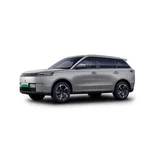
Jaecoo J5 EV
- Starting Price $36,990
- TransmissionAutomatic
- Drive TypeFront Wheel Drive (FWD)
- Fuel Type Electric (BEV)
We bought a Jaecoo J5 EV this year. 6000km in and we love it. Outstanding value-for-money. Great tech. Huge sunroof with full shade. Sweet ride and… Read more
handling. Sound system is ordinary. Not a huge fan of the gear change on the steering column. We drove SEQ to Canberra return and it's smooth and relaxing on the highway. Stop every 2-3 hrs for 30-60 mins of charging. No worries. It gets more than 400km range around town in SEQ, but that will drop closer to 300km on highway speeds in southern NSW highlands temps 0-10 degrees celsius. It doesn't have scheduled charging, which is a problem.

GAC Aion V (2025-2026)
- Starting Price $42,590 to $44,590
- TransmissionAutomatic
- Drive TypeFront Wheel Drive (FWD)
- Fuel Type Electric (BEV)
First few weeks of ownership, and I have to say this is one incredibly well designed and well built EV, the inclusions and tech fitted for the price… Read more
are outstanding. Get 510klm EV range, 180KW fast charging at public chargers and 11KW home charging. The Aion V comes fully loaded with luxury finishes, real leather seats and a fridge, freezer, food warmer in the console, 3 x memory seat positions, heated and cooled seats, full glass moon roof, amongst some of the standard fitment, as well as the latest tech ADAS safety items that seem well developed and sorted with localised tune. The ride and tune of the suspension is a real surprise. The GAC dealer network is rapidly expanding, and my experience with the customer service and support has been excellent from GAC Australia, they are very receptive and certainly listening to owners feedback on their vehicles, that's really unusual these days, well done GAC Australia. I can highly recommend the GAC Brand and the Aion V Luxury SUV to anyone wanting a full EV that really does deliver on the adverting promise and marketing, its winner and a great family SUV.. + an 8 year unlimited Klm Warranty for peace of mind.. Peter Warren GAC dealer is fantastic, nothing requested has been too much trouble, thanks Minh Leang for all your help, and also the team at Peter Warren Automotive - GAC dealer.

Jeep Avenger (2023-2026)
- Starting Price $49,900 to $60,990
- TransmissionAutomatic
- Drive TypeFront Wheel Drive (FWD)
- Fuel Type Electric (BEV)
What a cool little EV. Surprised these aren’t selling like hotcakes considering the value for money. They’re made in Poland by the Stellantis group… Read more
so they’re cool affordable quality for the same price as a used Tesla. It’s just a really fun car to get around in. An electric Jeep!! We love it

Kia EV5 (2024-2026)
- Starting Price $56,770 to $71,770
- TransmissionAutomatic
- Drive TypeFront Wheel Drive (FWD) and All Wheel Drive (AWD)
- Fuel Type Electric (BEV)
My partner and I upgraded our second car to an EV5 through Aaron at Keystar Kia. Aaron was very knowledgeable about the car, and availability for… Read more
delivery, very professional and friendly. The service in Finance from Katie was equally fantastic. She is very friendly, professional and helpful. The overall service was fantastic from Test Drive to Delivery. We definitely recommend Keystar Kia to anyone looking to buy their first car or upgrade.
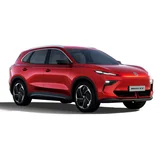
MG MGS5 EV (2025-2026)
- Starting Price $40,490 to $47,990
- TransmissionAutomatic
- Drive TypeRear Wheel Drive (RWD)
- Fuel Type Electric (BEV)
So disappointed with the quality of this vehicle. I purchased it brand new in 2025 at launch. Since then it's been nothing but problems. I've had the… Read more
same part replaced three times without the issue being resolved, not to mention the bugs that show up (the system updated while I was doing 110kmph on the M1 going down to the gold coast, which activated every safety system it had and almost threw me off the road). The dealership doesn't care or want anything to do with it, and keeps insisting I have "warranty" and that should be good enough. This will most likely end up with lawyers involved because I'm sick of this safety hazard on wheels.

Denza B5
- Starting Price $81,986
- TransmissionAutomatic and Continuously Variable (CVT)
- Drive TypeFour Wheel Drive (4WD)
- Fuel Type Plugin Hybrid (PHEV)
The car is wonderful. Despite the anti-Chinese car rhetoric, decided to take the plunge on a BYD owned vehicle. Did the research and took for a 2… Read more
hour test drive. The car is as advertised. Daily commute to work is purely EV and by changing my electricity plan and using scheduled charging, costs are minimal to use - huge saving over previous Everest, especially with the Trump diesel increase. Taken to Newcastle and Canberra (high speed) and mild offroad. Tyres are very road biased and battery quickly depletes at high speed (to be expected). Fuel consumption only shows "last 50 kms" so hard to determine, but high speed road travel is between 8 and 11 l/100km - not bad for a 3t beast. Internally the ride is quiet and comfortable and an initial bugbear of the car not "remembering" settings from the last trip has been resolved via an OTA update. (Had to turn radio on each time, synch with car play etc. Now this is automated.) 3500km of driving has cost about $250 in E10 fuel. Electricity minimal due to solar / Tesla battery / scheduled 8¢ midnight to 6am charging. Have not yet charged at public charging station as cannot see the point of a 1000% increase over domestic charging. Now the downside ... ... In QLD there are 4 dealerships. In NSW only 1. The sales process was smooth, but upon delievery of the vehicle, damage where somebody had reversed into something solid, scratches on left hand side, no Windows tinted and a dealer that never calls back to resolve issues. I'd suggest the sales has been a significant success and too much for the dealership to handle, but p-poor post sales service. six weeks into ownership and despite numerouse phone calls and escalation, the silence is deafening. Such a shame for such a good product. Denza is trying to compete with the luxury brands, but the service response is far from this level.
I hope to amend this negativity in coming months as I am hoping this is a teething / gearing-up issue and not a sign of the way they do business.
A small update - had first service and the technician there was very helpful and apologetic for poor service to date. Received a stone chip that migrated to a sizable crack (18"). Booked in with Obriens but they didn't even have the part on the system. 6 week delay as windscreen need to sail from China. With all this being said, still loving the car and after 4 months, done 8000 km. Going SYD to Longreach in 8 weeks so this will be a reasonable test.

Skoda Elroq Select (2025-2026)
- Starting Price $59,990
- TransmissionAutomatic
- Drive TypeRear Wheel Drive (RWD)
- Fuel Type Electric (BEV)
Great small SUV for the price. Pros - drives superbly, like a knife through butter, plenty of pickup - not as squirty as the Volvo EX30, but… Read more
comparable to the EX40, BMW ix. Feels a little more lively than the Kia EV3.
Brakes are a little sluggish as they are for all EVs - on par with the Kia and Volvo.
After 10 years driving a Golf the transition was surprisingly pleasurable. We love the tight turning circle and easy Reverse, Drive and Regen button.
We love minimal bings and bongs and the option to one button on the screen switch off Lane Assist, Start Air Con, or recycle air.
The default sensor warning start to brake is excellent as is the side mirror blindspot warning and standard reverse parking camera. If you’re a nervous parker upgrade to experience the front and overhead cameras of a Polstar or BMW which also has a wide angle front view if you live on a blindspot.
Standard manual seats are very comfy - more than the BMW and Kia. No headrest pushing your head forward, or side swaddlers giving you a hunchback…
And the Cons? Sound system is average in all the cars we tested except the upgraded spec BMW. Our test drive rattled on the driver side and our own rattles on the left! Opening the window helps. Better than the pathetic EX30 tho…
Hate to join the pedantic haters but the driver cup holders are pathetic and too small. The door bottle holders are at 45 degrees so no help with open coffee.
The MAG phone charger is great but not quite enough room for 2 iphones side by side. And if you want to save power, you can’t switch it off and there’s nowhere else obvious to stash your phone.
Boot is slightly wider and deeper than our Golf and much higher - with handy side cubbies, reversible mat and netting in various forms for who knows what - Skoda’s “Simply Clever” is bizarre at times. (I’d rather have a button to switch off the air con without having to press twice and reach over to the far corner of the screen… Talking of Right-hand driving - google maps speed limit is on the far left so not much use for the driver) It’s a shame the rear seats don’t fold down flat. Boot is heavy and you have to really give it a thump to close - so if you’re short, old, often have kids in the back and you care about their longterm hearing - upgrade to the electric boot which also has the foot wave to open. As a surfer and muso and like most Aussies we often have laptops, surfboards, guitars in the car, so the $10k upgrade also has some useful if slightly daggy built in rear side window blinds - also great for littl’uns.
All these slight let downs and annoyances are totally acceptable for us - the swings and the roundabouts - when we consider all the EVs we researched and tested. However one showstopper/elephant in the room remains stubbornly, reminding us that despite hours watching youtube reviews and reading car mags and drooling over the Skoda website and several Saturdays in the company of some sometimes beyond useless car salesman, we may have picked a lemon… nor did our top sales person mention that much of the “Simply Clever” functionality on the info and navigation system is NOT available for Australia. With no date confirmed by VAG if we’ll ever have connected services, and for this reason - there is no MySkoda app. No MySkoda app means you can’t schedule charging from midnight to 6am to only pay evil AGL 8c rather than the usual 37c. (Unless you set a good old fashioned alarm to head out to the car in your pyjamas to start charging.) The car has a clock for christ’s sake - how hard is it? We don’t care about losing out on keyless entry, driver profiles for settings, but needing to have a phone on bluetooth - CONSTANTLY - to play music or use maps is annoying. And if you live in regional or remote Australia and you’re not with Telstra - you won’t have any maps! Do we care about wifi updates? Maybe not but it means and annoying visit to Skoda Service when they spruik service only required every 2 years… Our Skoda salesperson said “I just use Apple car play”, not oh BTW Ignore everything you read about the app and the location functionality on the infortainment where you would nort program in a “home” location with a charging schedule 12 midnight to 6am…. If MG and BYD can do it for about 33% cheaper, and offer free charging on the Evie network and a 10Y warranty , it beggars belief that VAG are taking Australian drivers seriously. #LemonEmoji

Jaguar I‑Pace EV400
- TransmissionAutomatic
- Drive TypeAll Wheel Drive (AWD)
- Fuel Type Electric (BEV)
Excellent to drive, but battery efficiency needs improvement – As you’d hope from a Jaguar, the I-PACE is fantastically put together. The materials, lack of distinct panel gaps, trim pieces and screens are all… Read more
fitting when asking north of $150,000 for this EV.
This car is devoid of any squeaks, rattles and road noise, which is a very important trait in a silent EV.
My disappointment came in the form of electrical issues I experienced during my week with the I-PACE. For around 15 minutes, I was unable to interact with the digital climate controls and centre touchscreen - a slight problem on a particularly hot day.
Some cars I test have screens that might glitch, that a simple off/on can fix. However this persistent issue only resolved itself after some time, regardless of whether the car was turned off or on or was locked or unlocked.
I would have been pretty disappointed if this was my car and I was experiencing stereotypical Jaguar electrical issues less than 1000km into my ownership.
This trim of the Jaguar I-PACE will cost you $142,580 before on-road costs and incentives.
Our car was fitted with an enormous shopping list of options (all listed further down), including a panoramic glass roof ($3580), air suspension ($2002), and a Meridian Sound System ($1200). That brought the total price to $161,055.
The warranty is 5 years/unlimited kilometres, and high voltage parts are covered over 8 years/160,000km.
Your service intervals aren’t that different from a petrol car, occurring every 12 months or 15,000km, whichever comes first. However, what is a bonus is that your servicing is complimentary over 5 years or 200,000km.
It’s one of the better offers alongside those of brands like Genesis.
The added sound deadening and high quality materials ensure that the cabin of the I-PACE is silent. You can just feel it in your ear holes that Jaguar required this car to be as silent as a big cat hunting at night.
Although, that does change when you head into Dynamic mode, which activates some sound to be played through the speakers to enhance the feeling of speed.
I would also mention that the speaker upgrade is a must, especially if you’ve already committed to paying this much for an EV. I loved the rich sound this system generated; it’s a great way to make the most of a silent sound stage like this.
To my surprise, Jaguar have tuned these brakes to erode any sensation that this car has a heavy battery pack on board.
Yes, you do notice this car's weight at times, but those beefy brakes don’t make a fuss when being stomped on some backroads.
This AWD setup places two electric motors between both front and rear axles. With the car producing a combined output of 294kW (400hp) and 696Nm, you’re going to hit 100km/h in a brief 4.8 seconds.
This car feels every way as quick as Jaguar claims. It’s rapid, it’s exhilarating and it’s also unassuming to most punters who are up for a drag race from the lights.
This is a brilliant amount of power that absolutely helps the Jaguar achieve one of the most important characteristics of the brand: pace.
As an EV, you only have one forward gear to engage with, so there’s nothing more to say than it’s a perfectly smooth experience.
What I really loved was the way you select your shift into gear, all done by pressing buttons along a ‘bridge’ that emerges from the centre console to meet the dashboard.
Incredibly, the I-PACE manages to offer one of the best electric car driving experiences alongside something like the Kia EV6.
What you have is the best handling and driving EV you can buy. The way Jaguar has dialled in the chassis, steering and suspension of this car makes it quick to react but also extremely comfortable in mundane situations.
Air suspension helps with lowering the car for more dynamic handling, along with the adaptive dynamics package ($2002) fitted to our test car. I really haven’t had this much fun driving an EV through corners before.
I loved the driving position, the way you sit in the car to maximise the feel of the vehicle. This EV 1000% deserves to wear the Jaguar badge, and just makes me excited to see where the brand takes this electric platform into the future.
A slight kicker to all this positive stuff is the energy consumption. Jaguar claims 27.9kWh per 100km, a big difference to other EVs that usually hang just below 20kWh per 100km in their claimed figures.
You have a claimed 446km (WLTP) range from a humongous 90kWh battery.
I didn’t have the chance to range test this car, but I did find the projected range to slightly overstate the actual range I achieved in city driving. Regenerative braking helps keep some range when driving around town, but it’s not enough to bring that consumption figure down dramatically.
It is a little annoying too that this battery can only accept up to 100kW of DC charge, when other EVs are entering the realm of up to 350kW for fast charging.
I’ve always loved the interior of this EV, as it’s a bespoke design that hasn’t just been lifted from Jaguar’s other cars.
The new Pivi Pro software is a fantastic improvement from older cars, including connected services like weather and incorporating Amazon’s Alexa as a voice assistant. Over-the-air updates are also available, which the company has already used in the past to bring customers upgrades like wireless Apple CarPlay and Android Auto without having to visit a dealership.
The layout of the drivers display is easy to read and customise, so you can have as much or as little information as you might need.
The way the screens in here are integrated is fairly impressive, apart from the climate control screen which feels a little out of place. Making up for that are the screens inside the climate control dials, which are multi-functional and help reduce the visual clutter here.
If you’re looking for the best EV money can buy, it’s not this Jaguar. You can spend less for better battery technology, but you're not getting the best car if you do that.
What this Jaguar is, is a fast, elegant, comfortable, ergonomic luxury car that just happens to be electric. The way Jaguar have implemented the EV drive train has been done so well that you genuinely have a product that feels class-leading in the way it drives and performs on the road.
I would love to see some progress in the battery technology department to improve range accuracy and efficiency, but other than that, I think the I-PACE is a worthy luxury EV deserving of your attention over what Audi and Mercedes-Benz have to offer at this moment.
*Disclaimer - I work for ProductReview as their independent car and motorbike expert. I borrow new cars and motorbikes from manufacturers and owners to review. I am not paid or incentivised by these brands to post reviews. I write and create content to provide insight and information about any new or used vehicle I can get my hands on.

Geely Starray EM-i
- TransmissionAutomatic and Continuously Variable (CVT)
- Drive TypeAll Wheel Drive (AWD)
- Fuel Type Plugin Hybrid (PHEV)
2026 Geely Starray EM-i – Long-Term Review After Nearly 10,000 km We’ve now done close to 10,000 km in our Geely Starray EM-i, mostly daily city and… Read more
suburban driving, so I thought it was time to write a proper owner review rather than something based on a test drive or the first few weeks.
Overall, we’re happy with it. When you take into account the price, space, equipment and running costs, it’s very difficult to complain.
Electric driving – 8/10
This is where the Starray EM-i is at its best.
For normal suburban and city driving, running on the electric motor is smooth, quiet and very pleasant. The performance isn’t going to throw you back into your seat, but for everyday driving it has more than enough response.
The whole car just feels better when operating electrically.
Electric driving: 8/10.
Petrol engine driving – 6/10
Once the petrol engine becomes more involved, the experience isn’t quite as impressive.
It’s perfectly adequate and does what it needs to do, but the car feels noticeably less refined than it does when driving around town predominantly on electric power.
Petrol engine driving: 6/10.
Fuel economy – one of its biggest strengths
In our experience, the real-world fuel economy has been very good and seems to live up well to Geely’s claims.
Obviously everyone’s results will depend enormously on how and where they drive and how regularly they charge, but our Starray spends most of its life doing city and suburban driving and we charge it regularly.
From January through August, while approaching 10,000 km, I would estimate we’ve spent no more than about $150 on petrol.
For us, that’s a massive positive and one of the biggest selling points of the car.
Charging
We’ve just been using the basic charging cable supplied with the car and for the Starray it has been perfectly adequate.
Plug it in overnight and it’s ready to go again.
For the way we use the Starray, we haven’t felt any real need to install a faster home charger. If we moved to a full EV such as an EX5, we’d personally upgrade to a proper faster home charger, but for the Starray the supplied cable has done the job perfectly well.
City driving – 8/10
As a city and suburban family car, the Starray makes a lot of sense.
It’s quiet, comfortable, spacious and easy to drive. This is definitely where I think the car is at its strongest.
City driving: 8/10.
Long-distance driving – 6/10
For longer-distance driving, I’d rate it 6/10.
It will happily do longer trips and there’s nothing fundamentally wrong with it, but compared with driving around town, some of its weaknesses become more noticeable.
If most of my driving was long-distance or motorway driving rather than suburban Sydney driving, I probably wouldn’t rate the overall car as highly.
Handling – generally good
Handling is generally fine. It’s not a sports car and doesn’t pretend to be one, but for the type of vehicle it is I’ve got no major complaints.
One thing I particularly like is how well it controls its speed going downhill.
Some cars gradually gather speed on a descent and you find yourself constantly getting back onto the brakes. The Starray does a very good job of holding your speed rather than simply getting faster and faster because you’re going downhill.
It’s one of those little things you probably wouldn’t notice on a short test drive but that I really appreciate after living with the car.
Unfortunately, the handling is let down by one particular component.
Tyres – probably the worst feature of the car
The factory tyres would have to be one of my biggest complaints.
They’re terrible.
You can go around a normal left or right turn and, if you accelerate with any enthusiasm at all, the front wheels will spin.
I’m not talking about deliberately launching the car or driving aggressively. Normal acceleration while turning can be enough to overwhelm them.
For a car with an electric motor providing instant torque, tyre choice is important, and I think Geely has really let the car down here.
If there was one component I would change immediately to improve the driving experience, it would be the tyres.
Interior and second-row space – 10/10
The amount of interior space relative to the physical size of the car is one of its best features.
The second row in particular is excellent. For a car of this size, I’d give rear passenger space 10/10.
There is a genuinely impressive amount of room.
I’m 6’1” and have no problem getting comfortable in the driver’s seat. There is plenty of adjustment and space.
There is, however, one surprisingly annoying issue.
My partner and I both drive the car. After she’s driven it, I get back in and I’m basically squashed into her seating position until I manually select Profile 2.
The driver profiles/seating positions aren’t automatically linked to each driver’s key. I’ve had this functionality in my last four or five cars, so having to manually select my profile feels like a backwards step, particularly in a car that is otherwise so technology-focused.
It’s a relatively small thing, but it’s exactly the sort of thing you notice after living with a car for months rather than during a test drive.
Seat comfort
For everyday city and suburban driving, the seats are comfortable and I’ve got no real complaints.
On longer drives, I’d describe them as just OK rather than particularly good.
They’re certainly not uncomfortable, but if I was regularly spending several hours at a time behind the wheel, I’d probably want something a little better.
Boot space – Bullmastiff and Rottweiler tested!
We have a Bullmastiff and a Rottweiler, so boot space actually matters to us.
Both dogs fit in the back.
Just – but they fit!
That’s a pretty good real-world test of the cargo area and was part of the reason we moved away from our Volvo XC40 to the Starray.
There’s also a surprisingly useful amount of storage under the boot floor, which helps enormously when the main boot is occupied by two very large dogs.
We keep our first-aid kit under there along with two shallow storage boxes, and there’s room for a surprising amount of miscellaneous gear, particularly things we want with us on longer trips.
It means we can keep all that stuff stored out of sight without taking away the main boot space the dogs need.
If you can fit a Bullmastiff and a Rottweiler in the main boot while still having a first-aid kit, two storage boxes and other gear tucked away underneath, I think the designers have done a pretty good job of making use of the available space.
Air conditioning – very good, outside temperature reading not so much
The air conditioning is good.
It’s not an enormous car, so it doesn’t have a massive cabin to cool, and we’ve found the A/C gets the job done very well.
One related annoyance, though, is the outside temperature reading.
Ours seems to be way off a lot of the time. It doesn’t affect the actual driving experience, but it’s another one of those little details that makes you wonder why something so basic isn’t more accurate.
Heated seats – disappointing
This is one feature I really don’t like.
In several of my previous cars, the heated seats have heated from the lower seat area right up through your back. In the Starray, the heat seems to concentrate mainly on your bum and very lower back.
Rather than being relaxing, I actually find it uncomfortable.
The controls are also unnecessarily buried. To get to the heated-seat controls you have to go through multiple presses on the touchscreen.
Considering the enormous central screen, I don’t understand why Geely can’t simply provide permanent heated-seat controls along the bottom or side of the display. There is certainly enough screen real estate.
It’s a good example of something being moved into a touchscreen simply because it can be, rather than because it’s actually more convenient.
Sound system – awesome
The sound system deserves a mention because it’s awesome.
For a car at this price point, I’ve been genuinely impressed with it. If you enjoy your music in the car, I think you’ll be pleasantly surprised.
360° and reversing cameras – good, but occasionally frustrating
The 360° camera and reversing camera are good and make the car very easy to manoeuvre and park.
My complaint is the occasional delay.
Sometimes when you select reverse there can be a one-to-two-second delay before the camera appears on the screen.
One or two seconds doesn’t sound like much until you’re sitting there waiting for a reversing camera you’ve already told the car you need. In everyday use it’s surprisingly annoying.
When the cameras are actually on screen, though, I’ve been happy with them.
Apple CarPlay and Android Auto – good when connected, stupid when choosing a phone
When connected, Apple CarPlay and Android Auto work well.
The problem is that my partner uses Android Auto and I use Apple CarPlay.
Sometimes I’ll get into the car by myself and it will spend five minutes or more trying to connect to her Android phone even though she isn’t even in the car, rather than simply connecting to the iPhone that is actually sitting in the vehicle.
That’s just stupid.
There needs to be a better system for recognising which devices are actually present and connecting accordingly, or at least an easier way of prioritising the current driver’s phone.
Geely app – pretty bad, but does the job
The Geely app isn’t one of the highlights of the ownership experience.
I’d describe it as pretty bad, but functional.
It does what we need it to do, so I can’t say it’s useless, but compared with how polished the actual car can feel in some areas, the app experience feels like an area that needs considerably more work.
Controls – one Volvo habit you need to break quickly
I like that the indicators are on the left-hand stalk.
Our other car is a Volvo XC90, so moving between the cars feels natural in that respect.
There is, however, a very unfortunate similarity in control placement.
The Geely’s drive/park control is basically where the windscreen wiper control is on the Volvo.
So muscle memory from the Volvo can result in reaching for what you think is the windscreen washer/wiper control and instead operating the Geely’s transmission control.
It won’t suddenly stop the car, thankfully, but it can cause the car to jolt, which teaches you pretty quickly not to make that mistake again!
Obviously this isn’t a fault with the Geely itself, but it’s something worth mentioning for anyone moving regularly between a Geely and a Volvo.
Cruise control
I can’t really give the cruise-control system a fair long-term rating.
Most of our nearly 10,000 km has been city and suburban driving rather than long motorway trips, so I simply haven’t used the cruise control enough to form a proper opinion.
I’d rather leave that unrated than pretend I’ve tested it extensively when I haven’t.
Safety technology – don’t expect a Volvo just because of the connection
This was probably one of my bigger misconceptions before buying the car.
Given Geely’s ownership of Volvo, I thought more of Volvo’s safety philosophy and technology might have filtered down into the Starray.
Don’t buy it expecting a cheaper Volvo.
There are plenty of warnings and driver-assistance features, but the way they operate doesn’t feel anything like the systems in our Volvos.
The Starray will display warnings such as “BRAKE NOW” and provide audible or physical warnings, but in my experience I haven’t experienced the same sort of active emergency intervention that I’ve experienced in Volvo vehicles.
The safety systems may tick plenty of boxes on a specifications sheet, but from behind the wheel I don’t have the same sense of active safety intervention that I get from our Volvo XC90 or previously got from the XC40.
Reliability – no issues so far
We’re approaching 10,000 km and haven’t had any reliability issues.
There are software and usability things I’d like Geely to improve, but mechanically nothing has failed and the car has done what it’s supposed to do.
Obviously 10,000 km isn’t enough to judge how it will hold up over five or ten years, but so far I have no complaints about reliability.
Compared with our previous Volvo XC40
Our previous 2021 Volvo XC40 Inscription was a better overall car. It was more polished and refined, but it was also a more expensive premium vehicle, so I don’t think it’s reasonable to expect the Starray to match it.
The Starray’s strength is how much car you’re getting for the money. In some practical areas, particularly interior and rear-seat space, it actually suits our needs better.
Overall
Electric driving: 8/10 Petrol driving: 6/10 City driving: 8/10 Long-distance driving: 6/10 Second-row space for the size of the car: 10/10
The Starray EM-i isn’t perfect. The factory tyres are probably my biggest complaint, followed by some of the software and usability annoyances.
But as an everyday family car, particularly for predominantly city and suburban driving with regular home charging, it does its job extremely well.
For the price, I’m impressed and after nearly 10,000 km I certainly don’t regret buying it.

Jaecoo J7 SHS (2025-2026)
- TransmissionAutomatic
- Drive TypeFront Wheel Drive (FWD)
- Fuel Type Hybrid (HEV) and Petrol
Pro: Long range, excellent acceleration, All optional features included, quiet you can not tell when the charging engine is running. Cons: … Read more
Make sure you have the Jaecoo dealer support guy number programed to you phone because you'll be calling them often:
- Brakes won't released unless seatbelt is secured. this also applies to other features. - Change from reverse (R) to drive (D) is not always seamless. At times I found myself stuck in the middle of the road because D wouldn't engage, had to go to N first then brake then it let me select D. - All windows have the vendors watermark on them I was not able to remove. - Steering wheel levers are from generic left hand drive, Indicator, wiper control on left side. column gear shift on right side. need time to get use to. - Steering wheel over responsive you get jolted from side to side on slight movement. - The Head Up display has no Auto dimming, at night the display is super bright. There's manual setting option buried in the setting menu. - No sunglass storage usually found on any cheap car above the rearview mirror. - No grab handles on driver side. - No water jets for rear window.
Personally I find this car more suitable for Tech Savvies
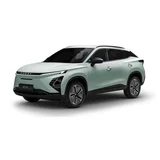
Chery E5 (2025-2026)
- Starting Price $38,990 to $42,990
- TransmissionAutomatic
- Drive TypeFront Wheel Drive (FWD)
- Fuel Type Electric (BEV)

Chery Tiggo 9 Super Hybrid (2025-2026)
- Starting Price $65,430
- TransmissionAutomatic
- Drive TypeAll Wheel Drive (AWD)
- Fuel Type Petrol and Plugin Hybrid (PHEV)

Toyota bZ4X (2024-2026)
- Starting Price $71,572 to $80,917
- TransmissionAutomatic
- Drive TypeFront Wheel Drive (FWD) and All Wheel Drive (AWD)
- Fuel Type Electric (BEV)

GAC M8 PHEV (2025-2026)
- Starting Price $76,590 to $83,590
- TransmissionAutomatic
- Drive TypeFront Wheel Drive (FWD)
- Fuel Type Petrol and Plugin Hybrid (PHEV)
All good after brake issue was fixed the engine light is off hopefully for good.