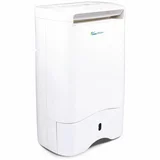

AusClimate DryPod
Verified15 reviews

- See all


Well, the good: much easier than buying those damp rid things, which I used to do: They were awkward, constantly needing replacement and a pain in the...the AusClimate DryPod seems to work well. We used it in my daughter's small bedroom. The moisture around the closed window, fogging up during winter and the wall above the frame had concerned me,… Read more
so this product arrived at the perfect time. Once the beads turned green, we turned on the unit to bring them back to orange. Very quiet and auto shut have made it efficient and safe. Easy. The not so good: One thing that would have helped though: If it had idiot proof, simple instructions in the box. I had to look at the box and try to figure out how it actually worked. Dirrrr! I am having a quick start/quick set up card or flyer would have made it 5 stars. Because it didn't have one and I went: "How, where what?!" for 10mins, they only get 4.

I received this product free so there will no bias. I’ve used it for several weeks and its decent. Im not too sure how much moisture it absorbs, but it needs to be dried out quite often. The silica beads which are orange coloured when they are ready to use and green when they need to be dried out on its own plug in dock. While they are reusable,… Read more
they seem to turn green very quickly. Seems like every few days they need to be “recharged” so that they can be used again. Ive found it handy to have but for small spaces only. Cupboards, small wardrobes etc. Only three stars as it is not long lasting. Thought perhaps get two weeks from every “recharge”. And by recharge I mean putting the pod in the dock and allowing it to dry out for about two hours. Ive also found that one drying cycle is not enough most times and you need to repeat it for a second time, taking approximately 4 hours. It has been handy and there’s no damp smell or what not in the cupboard and wardrobe theyve been placed in, so they seem to work decently. Perhaps if they lasted longer and didnt take 4 hours to recharge, it would be rated higher. But I can’t rate it more than three. Overall a ok products just seems it needs a bit of attention to solve the double drying time and the amount of moisture it absorbs. Do i recommend it? Half and half. While it’s handy, its strictly for small spaces, nothing bigger than an average built in wardrobe sized area. Its simple and easy to use, just the aformentioned cons.
- +2


I received the Drypod mini Dehumdifyer pack about a month ago. It comes with the dehumidifier station and 2 pods. It's designed to help combat mold from growing by removing damp conditions that mold thrives in. So far I have used the pods in my wardrobe – putting them into different shelves and drawers. Humidity in wardrobe leads to mold… Read more
formation that can not only damage your clothes (or other chattels), it can also lead to several other health issues which one doesn’t want to get if possible. There are a few ways to tackle this problem – The large air conditioner style systems that condense water out of the air. They are very effective, however they don’t tackle smaller areas such as cupboards and drawers very well due to the natures of tight spaces and potentially access to electricity.
For tight space areas the go to solution until recently was little pots filled with a drying salt. That in turn absorbs moisture and turns to sludge over a period of time - depending on how humid the air is.
When full of water you tip the sludge out somewhere and refill the pot with fresh salt and repeat. Sometimes when a bit clumsy/impatient I have been know to accidentally bump, kick push over the odd dehumidifier pot full of water, thus spilling the liquid onto the exact stuff one wants to keep dry to begin with.
Ausclimate a have applied innovative thinking with the reusable Drypod. Instead of having to add more salt, you replenish the system by drying out the moisture attracting beads over and over again using the dock. They have an indicator that tells you when they should be replenished which starts out Orange “Dry” to green “ full of water" (to my eyes the green is pretty dark so looks effectively black).
The best thing is you can’t knock them over and spill the sludge-water by accident. All the moisture is absorbed within the beads.
On first use, initial observations I was surprised by the amount of water is absorbed in a matter of days. So I got out the scales and started measuring them and the results have been very consistent. a pod weighs about 360g when fully replenished/ empty. And about 410g when full full.
It takes 2 hours for the dock to replenish a pod. The dock manages the time itselfs switching off at 2 hour mark. At which point the Pods are nicely warm and ready for reuse again. If you pick up a pod mid replenish the pod stops, return the pod to the dock it kicks on again. All very easy peasy.
Power use – I connected it to one of my smart plugs to track the power. The docking station uses 50w of power when running. Over 2 hours this works out to be 100wh of energy - See attached screenshot (n attached screen shot the measuring device uses about 3w to run so 36wh per day)
Ball park running cost calculation 2 Pods x replenish 1 time per week = 200wh per week 52 weeks in a year = 10.4 kwh
Lets say you use worst case scenario - peak electricity on a bad plan at $0.60kwh that works out at $6.24 per year to replenish. Pocket change.
If you are on solar or a better electricity then effectively free. So much less hassle than single use salt pots.
It’s early days so far but initial impressions they appear to be rugged and well built. So far no dramas, just a nice simple solution for removing unwanted humidity in tight spaces
Well done Ausclimate for designing a great real world friendly dehumidifier for tight spaces that you can't spill water everywhere, even when bumped accidentally.
- +7


The description of the DryPod in the included manual states: “DryPod is designed to help reduce excess moisture in small enclosed spaces such as wardrobes, cupboards, bathrooms, cars, caravans, drawers, and storage areas.” Ausclimate desiccant DryPod dehumidifier specifications: - Listed life of 300 cycles for a desiccant pod. - Working capacity… Read more
of a single pod is listed as 80 to 100ml of water. - The base station is listed as using 50 Watts of power.
The quality of construction of both the pod and drying base is excellent. The base is marked as having electrical approval for use in Australia.
The size of each pod is roughly 188mm high and 70mm diameter. The exterior of a pod has narrow vertical fins around the circumference and the desiccant appears to be contained behind the fins. The centre of the pod is a hollow tube which has vertical slits allow the drying base to blow hot air through desiccant. At the top of the pod there is a central plastic window through which a thin layer of desiccant can be viewed. The colour of that desiccant is used to determine when a pod requires drying. The desiccant is orange when dry and is supposed to turn green when “wet” and due for a drying cycle. In both pods I found the desiccant turns a black colour after absorbing moisture.
The instructions state each pod will absorb 80 to 100ml of water. As 1 millilitre of water weighs 1 gram I used a set of kitchen scales to work out how much water each pod would absorb. I numbered the pods as “1” and “2” so I could track the amount of water absorbed in each pod. Pod 2 started with 380gm weight as it arrived (sealed in the thin plastic) and the desiccant was orange in colour.
I put both pods on the window sill in the enclosed toilet room in my house. I measured the size of that space as 870 x 1480 x 2400mm. The door is always closed, the window shut and the toilet lid left down. I placed the pods there as I had noticed some condensation on that window a week before the pods arrived. Unfortunately the weather hasn’t been cool enough at night since placing the pods for condensation to be a problem. Both pods within two days indicate they required drying with the desiccant a black colour. I weighed pod 2 again and it was 424gm- there was a 44gm increase in weight indicating 44ml of water had been absorbed. I dried the pod for four hours on the drying base and then checked the weight again- pod 2 was now 370gm (10gm less than the weight when the pod was new and sealed.) That did improve the water absorption calculation – pod 2 had absorbed 54ml of water. (I hadn't checked the start weight of pod 1 so didn't measure the weight of it.) I had placed a temperature and humidity logger next the pods and it showed the humidity of that small room was basically tracking with the humidity of the house. There was no indication that the two pods had influenced the humidity at all.
I tried the pods again after drying and left them longer- allowing a couple of days extra time after the desiccant had changed to black. Then I weighed pod 2 again and got 437gm. That bumped the moisture absorption maximum for pod 2 up to 67gm = 67ml. That is significantly below the listed specification of a single pod absorbing 80 to 100ml of water.
When I dried the pods again I checked the weight during the drying process. With the pod starting wet at 437gm: after the first hour the weight dropped to 404gm, after 2 hours 380gm, and I let it run to three hours which gave 370gm. During the drying process the colour of the desiccant below the viewing window doesn’t always change to a clear orange- even after 3 hours drying. The desiccant in that top viewable section appears to be isolated from the main desiccant, and only has four small air channels for ventilation. The restricted air flow appears to slow the desiccant drying in the top section- after removing the pod off the drying base the normal orange colour returns after a short period of time.
I tracked the power drawn by the drying base over the 3 hour period. The total power used was 0.16kWh- so only a small amount of power is required to dry a pod. The pod taking at least 3 hours to dry can be annoying when they indicate drying is required so often.
After the trial in the small toilet room was not a success I transferred the pods into the linen cupboard. Each shelf area is 1000 x 380 x 390, and the doors are a tight fit when closed- isolating each shelf. Once again I placed the humidity logger on the same shelf next to a single pod. The pod’s starting dry weight was 358gm after 3 hours drying. Pod 1 was being used this time and it weighs less when dry compared to Pod 2. (Pod 2 was placed on a different shelf, but each shelf isolated when the doors are closed.) After 41 hours the humidity on that pod 1’s shelf had dropped by 4% (from a starting point of 64%, dropping to 60%.) As a side note the humidity in the house during that period was between 45 to 58%- so lower than inside the cupboard. Checking Pod 1’s weight it measured 377gm after 41 hours– so 19ml of water had been absorbed during that time. The colour of the desiccant was still orange. I’m continuing to monitor pod 1 to check how well it works long term on the single shelf space (which is 90% full of towels and other linen.)
For me, the pods haven’t performed very well. Perhaps if the starting humidity in the linen cupboard was higher there would be a more noticeable change?
For their size (188mm high and 70mm diameter) the pods don’t appear to contain much desiccant. There is a central hollow section and air gaps around the many plastic fins. For a comparison I found online you can buy sachets filled with 500gm of desiccant for around $23.00. (An entire pod weighs around 370gm and proportion of that weight is attributable to the complex external plastic casing.) The sachet desiccant changes colour like the pods to indicate when drying is required. Rejuvenating the sachets is done in a microwave oven in two 700 Watt 7 minute cycles. A sachet doesn’t look as attractive as these pods, but from my testing the pods are only useful in a very small enclosed space- where they won’t be seen (like the single linen cupboard shelf, a sealed container with items inside etc.) The size and shape of the pod is actually a hindrance in those situations.

Disclaimer- this product was sent to me free of charge as part of the ProductReview Ambassador Program, however I am not pushed to endorse the product in any way, all views are mine alone. I’ll start off honest- we’ve been asked to provide reviews of this product by today, which is, off the top of my head, a little less than a month since I… Read more
received the package. Whilst that’s enough of a timeframe for other products like cooking appliances etc. which you’d get a fair bit of use from, my basic understanding of these drypods is that they’re not something you’re going to see a rapid change out of. The work that they do is better measured in months, not days or weeks, so I may update this review down the track if I see the need to.
Anyway, I’m not too sure I’ve fully grasped the whole concept of operation for these things, but to my knowledge they’re designed to reduce/remove moisture in the air of smaller spaces. Thus far we’ve mainly had the two I was sent in our bathroom, which isn’t all that big but is poorly ventilated. I alternate them around almost daily as the indicator beads on top change colour pretty quick (which is probably reaffirming what we already knew regarding ventilation)
There’s no stark change in anything that I’ve noticed to date, but time will tell as to whether these drypods slow down or even completely stop the mould that we’ve been getting on the ceiling. Another place I may try them is in our pantry as we sometimes see signs of moisture in there too.
I doubt you should see much meaningful difference from a drypod in a larger room but over the course of a few months I think small rooms and cupboards, wardrobes etc. will definitely benefit.
- +2


Product Review invited me to assess this moisture absorber and to give an unbiased review. My first impressions were that it's sturdy, very well made and finished. The cylindrical canisters have a window at the top which indicates how much moisture each one is holding. As delivered, they were orange indicating they were completely dry internally.… Read more
The first decision was to choose a place which I felt would benefit most from this appliance. This was easy because we had a water leak in the slab of our floor discovered 12 months ago. It was so far advanced, we very luckily found the carpet in our WIR was wet under a washing basket I had just moved. The leak didn't make itself known elsewhere, it was the pressure of the washing basket on the floor that drew the water up to the surface. It contained my work clothes and so rarely got moved. (There's no ironing to be done in this basket my wife said !) The WIR was the obvious place to try out the DryPod I thought. We didn't replace the carpet until very recently, (the floor was bare) so the floor had a very long time to dry out. I was surprised and very disappointed to see both canisters turned from orange to dark green in around 36 hours. This told me we still have a fairly damp WIR. I placed them on the base, and it took around 2 hours for them to become orange again. When you first put them on the base unit, the light on the base is solid green. When the canisters are dry, the light flashes white. I placed them back into the WIR and this process was repeated several times. Eventually, I wondered if this was a fair or normal situation to conduct the trial. Then came a further complication, 65 mm. of rain in 36 hours ! The air felt damp and the humidity as measured by my weather station was around 80% outside for several days after. Unfortunately, the percentage inside the house was not too far behind. I then placed the DryPod into a very small room (home office size) and the results were the same. 36 to 48 hours and the canisters were dark green again. I dried them on the base each time and got the same results over and over. It is necessary to say at this point that the water table has risen considerably since that deluge, as can be seen around our block. In a home without our problems, I think the DRYPOD would be a very valuable asset. Nobody wants a damp WIR and this nifty little device would do the job very well. In years past, I have purchased the packeted crystals (for our caravan) which do the same job, but when they are wet, it's into the bin. This appliance is reuseable over and over again, saving you lots of money. Under the circumstances I have described, it's hard to give it a rating but I'm going to say five out of five based on it's obvious effectiveness. A very generous four-year guarantee if you register yours online.
- +1


We have long had an issue with dampness/humidity in our clothes wardrobes. Typically, we have used moisture absorbers such as Damp-Rid to deal with it. It works really well, but after a couple of months it has all liquefied and must be discarded before re-filling: and you must be careful not to put a hole in the bag, because the liquefied calcium… Read more
chloride is VERY corrosive.
We were invited to try the Ausclimate DryPod reusable moisture absorbers, which use silica gel and are re-chargeable on a provided stand. Sounded like a great idea! The pods contain orange coloured particles which eventually turn dark green as they absorb moisture. When this is done, you simply put them on the recharging stand which gently blows warm air through the pod to dry them out. When they have turned orange again, they are ready for re-use! All of this with no waste to dispose of or risk or spilling nasty liquids. Ausclimate claims each pod can be used up to 300 times, and the product comes with a 2+2 year warranty. So, how do they go?
Do they work? Yes, definitely- but with a small catch. A big advantage is their compact size: they can fit in fairly small areas if you need, and work very well there. However, if they are in a large area (like our wardrobe) they turn green within 3 days and need a re-charge. We have also found that the pods usually take two 2 hour cycles to fully recharge the particles. Over a claimed life of 300 re-uses, this equates to 60Kwh of power; with our provider, that is an average cost of $18.41. If we allow 3 days before recharging, this gives us about 900 days life per pod- about 2 1/2 years each! Of course, it remains to be seen if we will actually get this long a life out of each pod. Still, this works out to an average cost of about 2 cents a day! Compare this to a standard Damp-Rid container from Bunnings- along with a 1.24kg refill pack and a claimed life of up to 45 days per fill, that is an average cost of about 7 cents per day: more than three times the daily cost! This is food for thought: the DryPod is about a third the usage cost of Damp-Rid, and with the benefit of no messy refills, and what appears to be equivalent performance. The other thing that should be mentioned is that (predictably) the larger the area you want to dehumidify, the shorter the recharge time: this product is best suited to relatively small volumes, and best not too close to rooms that generate a lot of steam (eg showers or kitchens).
All in all, a product that does what it says, is clean and easy to use, fits most places, and has a significantly lower running cost than chemical alternatives
- +4


As soon as I had used this for one full cycle, I was sold and went looking for them online several times over the following weeks to see if I could purchase more of the pods for other places in my home. I was sent this as a trial product and at this time can't find them to purchase online yet, so it will be the price that determines whether I buy… Read more
more myself, but if it was only based on the design and functionality I would definitely be purchasing.
I have a damp house and have multiple of the generic refillable crystals-to-liquid type moisture absorbers around the place in cupboards and various nooks. They work fine but have many times been tipped over by pets or kids spilling noxious liquid, and they're a bit of a pain to throw out the clumped crystals, tip out the gross liquid, rinse, dry out, refill, repeatedly.
So I was genuinely excited to try this product. The pods are so much more aesthetically pleasing to have around the house! They don't look ugly like the other type, so can be happily out in plain sight and there's no worries about them being tipped over as they don't leak anything.
The package came with two pods and one base. The pods were ready to go out of the box with orange beads showing in the display on top. I replaced two of my damp-rid things with them and after two days the beads were green. I thought this meant they were going to be a pain, as that is much faster than I have to replace the other type of containers, but nope, all I had to do was pop it on the base and in less than two hours it was dried out and ready to go again! (I was really surprised how fast it was as I was expecting to have to leave it overnight - I have looked at the timestamps on the before and after weight photos I've posted and they're two hours apart, so it finished drying sometime before two hours when I got around to noticing it was done and weighing it.)
For the past month, every couple of days I have popped one or other pod onto the base to dry out and am finding that very easy and convenient. The base has a green light to show that it is currently drying out a pod, and that light goes white when it has finished drying. The beads in the top display window are very dark green when it is full of moisture, and have returned to being bright orange by the end of the drying cycle on the base. Despite changing them more often than the liquid type containers, I am finding this much more simple and pleasant of a system to use. It will be interesting to see how long they last as I am aware my house is probably *more* damp than the situations they are ideally suited to, and so they are probably filling up much more quickly and being reused more frequently, than ideally intended. I'll update in future with approx how many cycles I get out of them. For now I can just say that after one month, they're good as new.
The first time I dried one out I weighed it wet, and then again once it had been dried out on the base. Wet it weighed 423g and dry 376g, so it absorbed 47g of water from the air in two days, then dried out in under two hours ready to go again.
I can't comment on the price point so therefore on the value for money, but I can say that they look great, are easy and convenient to use, and are very effective!
(One note if these reviews are being checked by the company - there’s a spelling mistake on the box! I don’t have the box anymore to double check but from memory it was the word “Drawers” spelled as “Draws” on a side panel showing the places you can use them.)

A great update on an old product. I've always had a good result with Ausclimate products. I own 2 dehumidifiers which I've used for many years - one is a very large Ausclimate unit which really helped out after a wet season. Normally, we use ducted airconditioning daily which keeps our house dry, but there are spot areas, including around storage… Read more
that has less air circulation, so could get a little damp. Thats where this product, which may seem a bit niche at first sight, has its purpose. It fits in to improving these smaller areas, such as inside closed boxes and the back of cupboards/cabinets. As a comparison - I've used the desicant granules before with mixed results. I have forgotten about some I had put into containers to keep contents dry. They became a bag of slop of sticky water and made the problem worse - the item in the container they were supposed to protect becoming more mouldy and water damaged than if I had just done nothing. Especially in a cardbord box. Not these items though - they have a coloured indicator to remind you of their status at a glance. And if you forget, all of the contents are contained in the module. My photo shows a typical use for me (pod highlighted) and the items are going along dry as you can after a period of use. There are lots of other photos on this site showing pods under cabinets etc. Will review performance of these pods after a few months. Another clever product Ausclimate - now I'll have to get more pods.
Possible Improvement: Having more powered bases would be good for cabinets, to provide continuous operation of the dry pods. There one in the box, but I would like one for each cabinet.


I've been using this now for the past 10 days in my clothes cupboard. I live in tropical QLD where it can be quite moist and humid. Previously my clothes would smell a bit musty (because of the humidity). Since I have used this I'm actually surprised how much moisture collects every day. My clothes smell fresher and don't feel so moist now which… Read more · 1
is a positive. The container mostly fills after about 2-3 days when I empty it but the device is small enough that it doesn't take much space at all. I find it useful and would get another one for my kids cupboard and linens. The fact that it's reusable is also a big plus. I've spent so many dollars on the single use ones you get from the hardware stores, but honestly, they weren't as good and the fact that you have to throw them away feels such a waste. This option feels a lot more environmentally friendly. Overall, good product and worth the investment especially if you live in a moist / humid area and need it for your cupboards.

I recently received an Ausclimate Drypod courtesy of the Product Review Ambassador program, thanks folks. I have high hopes for this product as it addresses an ongoing issue in our home. As previous reviews will show, just because I have been provided a product which I can keep upon completion of my review does not mean that I will heap praise on… Read more
it if I do not consider it deserved. This will be an honest, warts and all, review expressing my genuine, personal opinion of the product.
For many years, we have suffered from damp in our ensuite cupboard beneath the sinks. While there is no obvious leak, the door hinges have gradually rusted over the years and other metal items also rust over time. We keep a Damp Rid container in there and change it every month or so.
The Ausclimate Drypod is promoted as a "reusable moisture absorber", which should mean less waste from repeatedly disposing of Damp Rid containers and the like.
The Drypod came with two absorber pods and a base unit. The concept is simple enough: the units absorb moisture wherever they are placed, then the base unit dries them out ready for re-use. Each absorber is about 20 cm tall and about 7 cm in diameter, containing a core of silica beads visible through a clear window in the top. When dry, the beads are orange in colour. When full of moisture, they turn dark green.
Since the units absorb moisture, I placed one at each end inside the cupboard, on different shelves. Then I waited...
This is a review that should actually take some time to conclude fully, hence my intent to stimulate excess moisture with our shower. However, after just a few days in the cupboard, both units were showing dark green.
The base unit plugs into the mains and, when an absorber pod is placed on it, blows a gentle stream of warm/hot air up through the pod to gradually dry it out. A cycle takes about two hours. I did this in the garage, as I did not want the moisture back in the house. The indicator light goes from green to white at the end of a drying cycle. If the silica has not gone orange, just repeat the process.
Unlike a Damp Rid container, where you can see the collected water, these units have no way to show how much moisture has been absorbed. To get an idea of the amount of water captured by the first pod, I weighed it on a digital kitchen scale: 442 g. I then placed it on the drying base and ran it for two cycles to be sure it was completely dry. The dry weight was 382 g, a difference of 60 g. Since 1 litre of water weighs 1 kg, this meant it had absorbed about 60 ml in just a couple of days.
A typical Damp Rid container holds about 250 ml when full and needs changing every month or so. The Drypods each absorbed about 20% of that in a couple of days.
I then repeated the drying and weighing process with the second pod, which went from 445 g to 378 g. That equates to about 67 ml.
I repeated this process a couple more times over the space of a fortnight. In each case, I waited until the pod was dark green, almost black, then dried it using two cycles on the dryer base. One cycle was never enough.
The average weight difference across both pods for three cycles was around 60–65 g, give or take. This meant that the two pods were actually absorbing a little more water than the single Damp Rid container we previously had. I would put this down to having two pods, each at either end of the cupboard and on different levels.
So, what do I think of the Drypod?
Well, it clearly works. The fact that it absorbed as much moisture as the Damp Rid, if not more, suggests that it is a good solution, no pun intended, to help remove damp from enclosed spaces. In this respect, it appears to work well. It is also a more robust solution than a pot of crystals that eventually fills with liquid and can spill, so it is potentially more versatile.
My reservations would be the plastic pod itself, the silica beads inside and the overall cost-effectiveness. Unlike our existing Damp Rid setup, where I can empty the brine liquid and refill the container with cheap, fresh crystals, the Drypod has a finite life of “up to 300 cycles”, after which it will presumably be discarded.
I would like to see some form of refill or recycling capability available. The pods have no recycling symbols on them, so they would likely end up in landfill. I also think different capacities should be available.
That said, cost-effectiveness is actually where I feel this product may fall down. There is no published pricing available at this time but, based simply on the quoted two-hour drying cycle at 50 W, which I had to repeat each time, the running costs will add up. Every five double-drying sessions uses roughly one unit of electricity and that does add up. Over the expected life (about two years for us), each pod would cost about $45 to dry at a cost of 30c (YMMV) per unit of electricity.
When ALDI sells a 3.4 kg container of Damp Rid crystals for about $10, and estimates for the Ausclimate Drypod base unit bundle with two pods are between $49 and $79 AUD, I really do feel this will be a niche product only, and will disappear within one to two years at best.
While the pods undoubtedly work, and work quite well, I do not see this as a sustainable product. The lack of recyclability, relatively limited absorption capacity and undoubtedly higher initial cost make this feel like a bit of a greenwash product: good on the face of it, but less convincing once you get into the nitty-gritty.
On that basis, I can only give it 3 stars.


In my opinion this is a bit of a niche market item however if you have the need, it's a great little item. I was sent this product as part of the ambassador program to review. While there is always a sort of flattering nature to this that endears us to write more positively about a product, I have always tried to be quite honest and review… Read more · 1
things in the way that is helpful as that's what I look for when reading reviews.
In all honesty, I wasn't very interested in this product when it was offered but I checked with my wife to see if it was something we wanted to try out and she actually jumped at it. As it turns out, I was not aware that she has been silently battling mould in the bathroom and under the sink in our kitchen.
We have been using the AusClimate DryPod for the past 3-4 weeks and I'll start out by saying that I'm not 100% certain that this is enough time to give you an honest review about it's efficacy, so I will try to update this review in a few months.
Pros: - Solid well-established brand - AusClimate has a great reputation in air purification and demhumidifying - Colour indicating silica to let you know when it needs to be changed. - Simple non-intrusive design that is good for cupboards and smaller spaces. - Passive dehumidifying (you only need to occasionally plug in to "recharge" or dehydrate the silica.
Cons: - Only appropriate for small spaces, won't help dehumidify an entire room (not that they claim it does) - Not particularly rugged. This is probably by design as it allows plenty of air flow which you need but I wouldn't want to see it banged around too much.
We implemented these pods in our bathroom first to see if it would help reduce humidity and mould. Let me get right out there and say, do not use these in your bathroom (which I'm pretty sure it says in the manual anyway but some people don't read those... or listen to their husbands. Shower steam just saturates straight into these and I think that the beads had changed colour within 5 days.
So we quickly dehydrated and switched to using 1 in the cupboard under our sink which only occasionally has a damp cloth put in it and I put the other one in a cupboard in my workshop that I use to store 3D printer filament for the past 3 weeks.
I was particularly interested in using it for the 3D printer Filament because filament is hygroscopic and needs to be stored in low-humidity environments. A perfect test case for this product in my opinion and as it turns out, the AusClimate DryPod performs brilliantly in this setting. I have a hygrometer in the cupboard and have traditionally just saved old silica packets as a poor man's version of the DryPod. Prior to putting the DryPod in the cupboard the humidity reading sat consistently at about 46-50% with my leftover silica packets. Since adding the DryPod (and removing the silica packets) the humidity readings have not gone above 35% which is well within the range of ideal storage for most filaments.
SO, one pod has been officially designated to that purpose and has significantly reduced the time that I spend drying filament which is reasonably time and energy intensive. For me this is an absolute win and a great test case to prove that in small spaces (Cupboard is about 80x60cm unsealed), the DryPod works perfectly.
Unfortunately, as I indicated at the start of this review, it's a bit too soon to tell about under the sink. Mould is the biggest indicator that we're going for there and doesn't always show up in a month. I did put the Hygrometer in that space for a few days and got similar readings of about 35% humidity which is reassuring, but I have to be honest here... I didn't have any pre-readings to share so it's hard to know what kind of difference it has made. Time will tell with this application and I'll do my best to update this review in 3 months with our experience. My wife did clean the space under the sink just before we put it in so if no mould shows up that will be the indicator of a win.
I also don't have a great indication of how long these units actually last before needing to be dried out again (apart from the very clear advice not to use it to try to dehumidify a bathroom - again pretty sure the manufacturer makes that clear but hey, at least you now know that they're not making it up, I have stress tested this for you!).
Overall impression, great little product and I think we are continually thinking of more places that it would be useful (Caravan, long-term storage areas like the attic, even considered adding to my gym bag but am a little concerned about durability there).

We live within 700m from the beach break and are susceptible to moisture, dust and mould so the little AusClimate DryPod is the perfect addition for our wardrobes to protect our clothes and accessories ie. leather boots IYKYK. I really love how small and compact it is, plus it's VERY quiet! It's easy to use, it looks aesthetically pleasing to… Read more · 1
the eye and is compact.
Only 2 things I would change about it; it has to be plugged into a switch socket, if this was more of a rechargeable battery, it'd be more perfect so I could avoid cables running across the room, plus I'd love if it had a little screen to tell me what the humidity level is.
Overall, it's the perfect dehumidifier for our wardrobes and our little Ensuite, and if you have issues with moisture being trapped in your wardrobes and want to save on landfill from those ones you buy at Bunnings; I'd highly recommend the AusClimate DryPod!
Find out how AusClimate DryPod compares to other Dehumidifiers
Know better, choose better.


AusClimate DryPod - Test in Progress, further to come. WHAT: Is is a small, silica gel based dehumidifier for small spaces. There are two cylindrical pods filled with colour changing gel balls, and a base with a heater & a fan. HOW TO USE: The pods are placed in a space where you may wish to control excess humidity.… Read more · 1
The silica gel adsorbs up to 40% of it's weight of water, and works most efficiently at temperatures below 25ºC and in moderate humidity {30-70% RH}. As the gel adsorbs moisture, it changes colour from orange to a dark green-blue colour. Once it has changed colour (contained the maximum amount of moisture) the pods are placed on the base and the power turned on. The base will blow heated air through the pod to dry it out, about 2 hours, and the the gel should return to its orange colour.
EFFECTIVENESS: This will be the interesting test: Tried it in small ensuite; It is going to be most effective in small spaces, e.g. bathroom or caravan is the largest space one would use it in, and it would work more effectively in smaller spaces. It will also depend on placement and air circulation.
LONG TERM PERFORMANCE: Again, this is not stated, but industrial, reusable silica gel manufacturers for transport might claim 10 or more regeneration cycles without significant loss of performance, but the heating cycles degrade the gel so it will become less effective over time so it will not adsorb moisture as well (changes colour very quickly as it has less capacity) and then it will be $ to replace the pod.
UPDATES: to come as testing progresses


UNDERSTANDING HUMIDITY: Humidity is a measure of water in the air. High humidity encourages the rapid growth of dust mites, mould, fungus, and mildew. These can damage your health by triggering allergies, produce stale odours, and destroy valuable possessions. High humidity is often associated with geographic locations (tropical climate) and… Read more · 1
seasonal factors (hot and rainy summers), as well as specific places in a home (laundry or bathroom).
SOLUTIONS: Products that reduce humidity are called dehumidifiers – when asked to describe one, most people think of an electrical appliance that removes moisture from the air and stores it in a container for disposal. They are great for extreme circumstances, and I have one in my laundry that collects around 20 litres a day. Running 24/7, these can consume considerable electrical power.
Home air conditioning and modern building design have reduced such extreme circumstances. But even if you live in a new home, you are still likely to experience high humidity in specific locations – bathrooms, cupboards, drawers, cars and even caravans.
Until now, the most common solution is containers that use calcium chloride crystals to absorb moisture and convert it to liquid. These are single-use disposable products like Damp Rid. Some are scented, and it's easy to spill the contents when moving them.
The Ausclimate DryPod offers a portable, cost-effective, and reusable alternative.
THE SCIENCE: The Ausclimate DryPod works on the same principle as the small packets labelled ‘Do Not Eat’ that you find in medications and in product packaging for things like leather goods and shoes. These small packets contain white silica crystals and provide a one-use solution to absorb moisture.
But rather than white silica crystals, the Ausclimate DryPod uses orange silica crystals that come with specific advantages.
Non-toxic safety: Orange silica crystals are free of toxic heavy metals. Reusable: Once saturated, if heated from 93°C to 121°C, they can be reused.
Visual guide: When dry, the crystals are bright orange and turn dark green when fully saturated, so you know exactly when they stop working.
HOW DOES IT WORK? The Ausclimate DryPod comes with a plug-in base and DryPod reusable canisters filled with silica crystals. There is a visual indicator at the top of each canister to check the colour of the crystals inside.
While I understand why the word ‘rechargeable’ is used by manufacturers to describe these products, it is confusing, although I struggle to come up with an alternative. The plug-in base uses heat and airflow to remove moisture/dehydrate the silica crystals (returning them from green back to orange) so the DryPod canister can be reused. This typically takes 2 hours, so the base is programmed to automatically switch off after 2 hours.
Once dehydrated (the silica crystals turn orange again), the canister is ready to be used again and can be returned to its original location in a cupboard/draw or used to address humidity somewhere else.
MY EXPERIENCE: I had 2 DryPod canisters and placed one in my laundry, where I knew I had a problem, and the other in my master bathroom. As I said earlier, my laundry has an extreme example, and my plug-in dehumidifier continued to draw 20 litres of water despite the DryPod canister.
The one in my master bathroom turned green in just 4 days. So clearly it was working and indicated that despite the exhaust fan, there was a problem of which I was unaware. I moved the one from my laundry to a clothing cupboard, and again it turned green in 4 days. Again, indicating a problem of which I was unaware.
WHAT I LIKE: • Placed in the right location, this product does exactly as promised. • The ‘recharging’ base works exactly as described. • The shape of the canister makes it easy to place anywhere. • The visual indicator makes it easy to know when the crystals are saturated. • There is no risk of spilling liquid.
WHAT I DON’T LIKE: • The instruction guide needs to be better written in larger print. • There should be an official unboxing and how-to-use video. • There should be a guide to floor space area & capacity.
For a practical and effective reusable solution in specific small areas like cupboards, drawers, and cars, I give it 5 stars. Would I buy it? - YES.
Extra Information


ProductReview.com.au has affiliate partnerships. These do not influence our content moderation policies in any way, though ProductReview.com.au may earn commissions for products/services purchased via affiliate links.